
What is Objectology?
We rarely question the objects around us. What might they reveal if we did? Who we are, what we value and how we see the world.
Objectology is an artistic philosophy that examines these questions through the relationship between objects, art and meaning.
Objectology starts there.
[Read the full explanation of Objectology →]
Available Artworks


IT"S MY LIFE
2025
Vintage Plaster Statue with applied mixed media
28cm High.
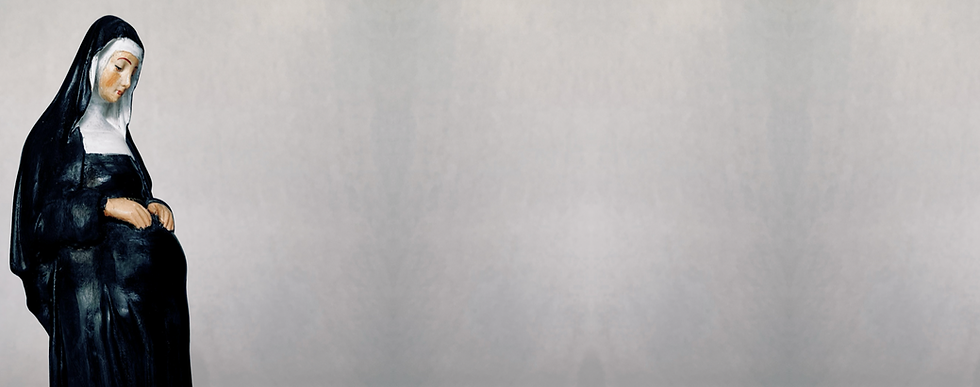
IT"S MY LIFE (2025)
Vintage Religious figure with added multi-media
28cm high
€1250-
What's more sacred - obedience, or ownership of your own body?
This pieces explores a young woman’s journey through a series of life-defining choices. First, she chose to dedicate her life to being a nun. Then, a possibly spontaneous, but wholly natural choice, leads her to pregnancy. Now, a final choice - the proud mother-to-be must choice - her child or her faith?
But why? Is there not a path that honours both her devotion to her faith and her newfound motherhood?
LET"S GET THIS PARTY STARTED
2025,
Vintage Mickey Mouse figure with added multi-media
38cm high
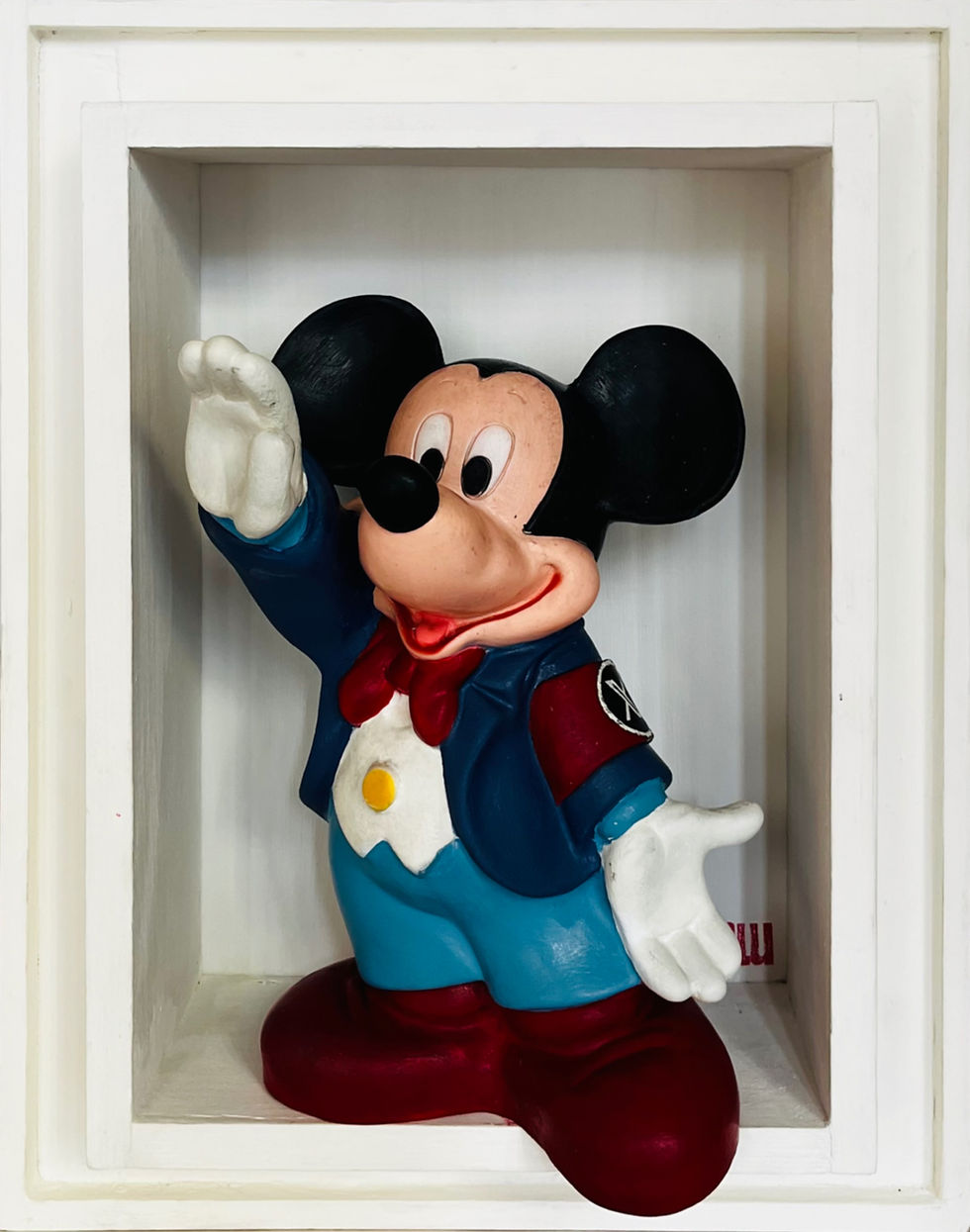
LET"S GET THIS PARTY STARTED (2025)
Vintage Mickey Mouse figure with added multi-media
38cm high
€1850-
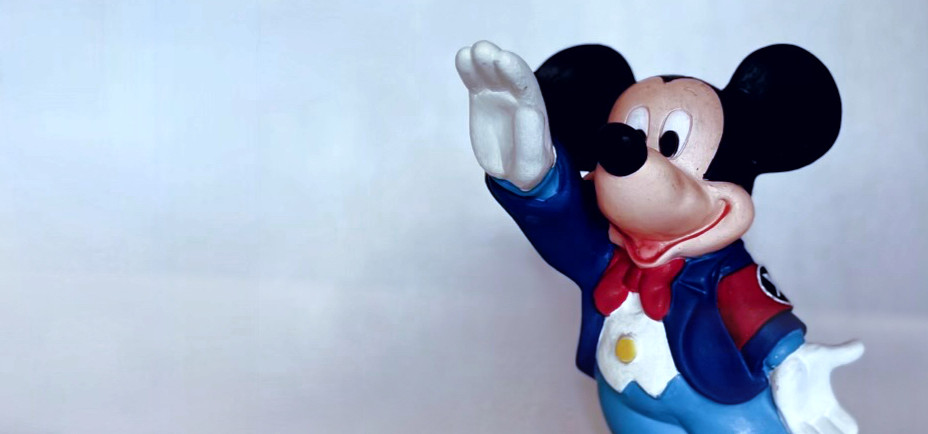
Is this just a party, or the beginning of something more troubling?
Mickey Mouse, one of the world’s most recognisable symbols of comedy and innocence, is depicted giving a Nazi-style salute. His armband carries the X logo rather than a swastika, directly referencing Elon Musk’s controversial gesture at Donald Trump’s inauguration in January 2025.
Musk later described the gesture as an expression of his affection and, when criticised for its similarity to a Nazi salute, dismissed the controversy as a “tired attack” and made light of it, describing the gesture as a joke. The seriousness of the gesture was therefore reframed as humour rather than something requiring reflection or apology.
The choice of Mickey Mouse is intentional. In 1938, only weeks after Kristallnacht, Walt Disney welcomed Adolf Hitler’s principal propaganda filmmaker, Leni Riefenstahl, to his Hollywood studio. While much of Hollywood distanced itself from her in protest at the Nazi regime’s actions, Disney received her and publicly showed her around his studio.
So, can humour or entertainment make something less offensive, or more acceptable, simply because it is presented in a light-hearted way? Is a Nazi salute less significant when made as a joke? Does an association with extremism diminish if it is presented through entertainment?
Public figures and cultural icons with enormous audiences also carry great influence, and with that influence comes a responsibility to recognise the potential impact of what they say, do and normalise. The framing may be light-hearted, but the meaning — and the influence that comes with it — remains.
The title plays on the double meaning of “party” — both political and celebratory — adding an intentionally naïve note to the work. It also hints at the possibility of a new political movement just getting started.
BORN TO DIE
2024
Vintage Plaster Statue with applied mixed media
28cm High.
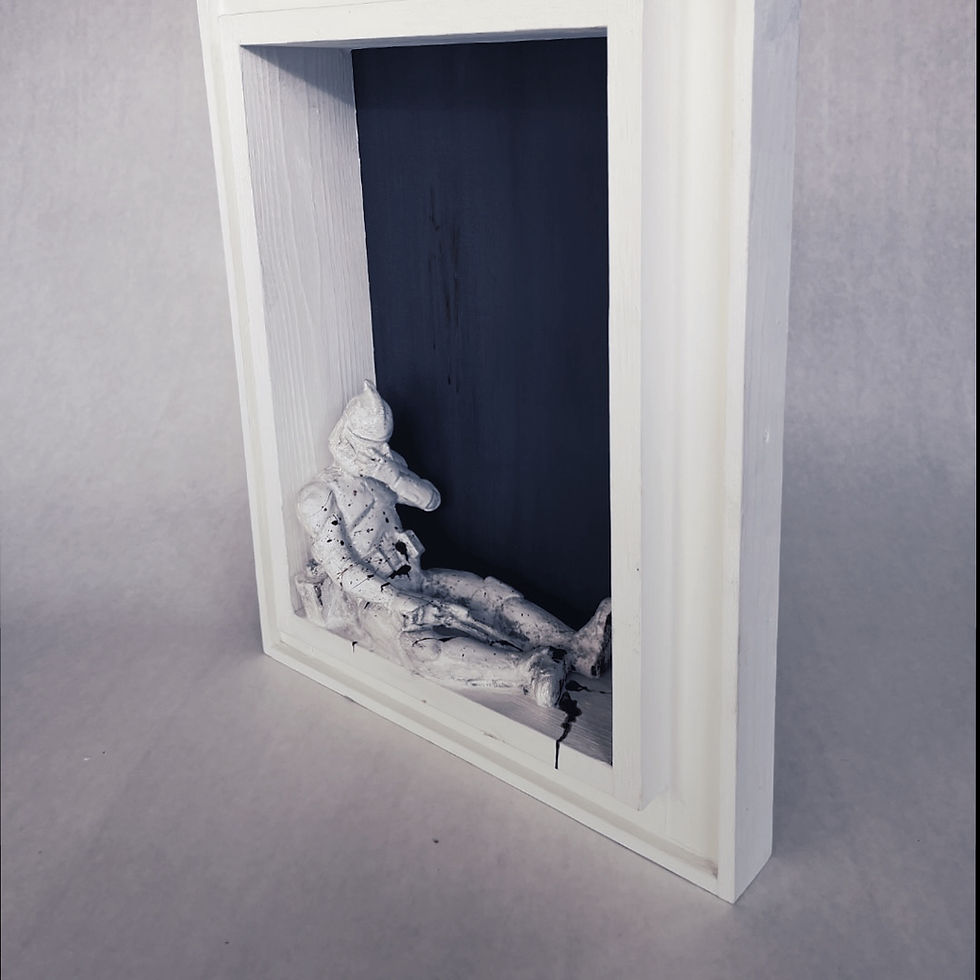
BORN TO DIE (2025)
Collectable Star Wars figure with added multi-media
51cm x 41cm (Framed)
€1850-
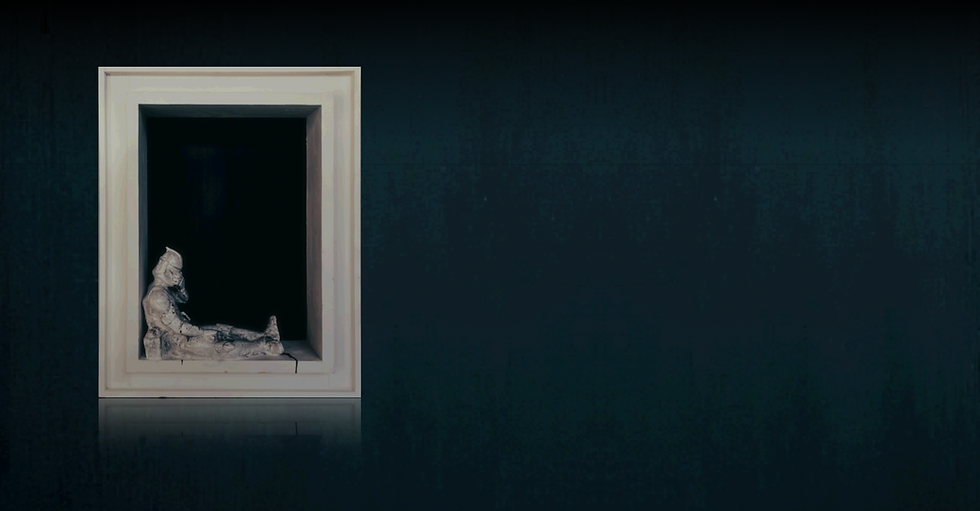
What happens to us when the horrors of war are repackaged as playtime?
Born to Die questions how popular entertainment can turn violence and conflict into spectacle. The stormtrooper, overwhelmed by trauma, reveals the unspoken horror beneath the polished fantasy. Presented as faceless, emotionless clones, they are nevertheless flesh and blood — their suffering erased for the sake of the story.
Do we, as parents, eager to entertain our children, unknowingly perpetuate a sanitised version of conflict and suffering? When war is transformed into toys, costumes and entertainment, does its violence become easier to overlook?
And what happens when the imagery of war becomes so familiar that we stop seeing the war within it?
NOTHING IS REAL
2025,
Vintage Statue of Maria with added multi-media
38cm high
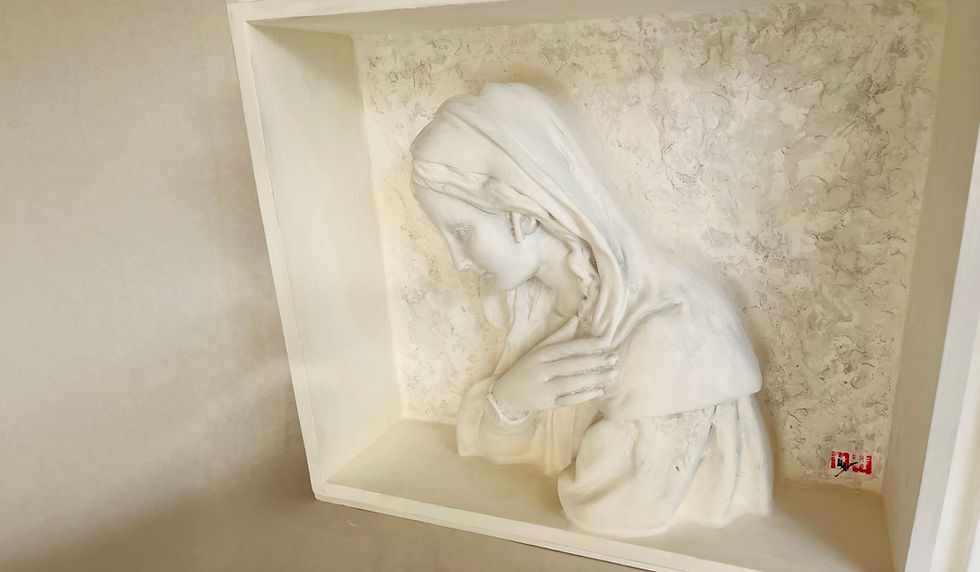
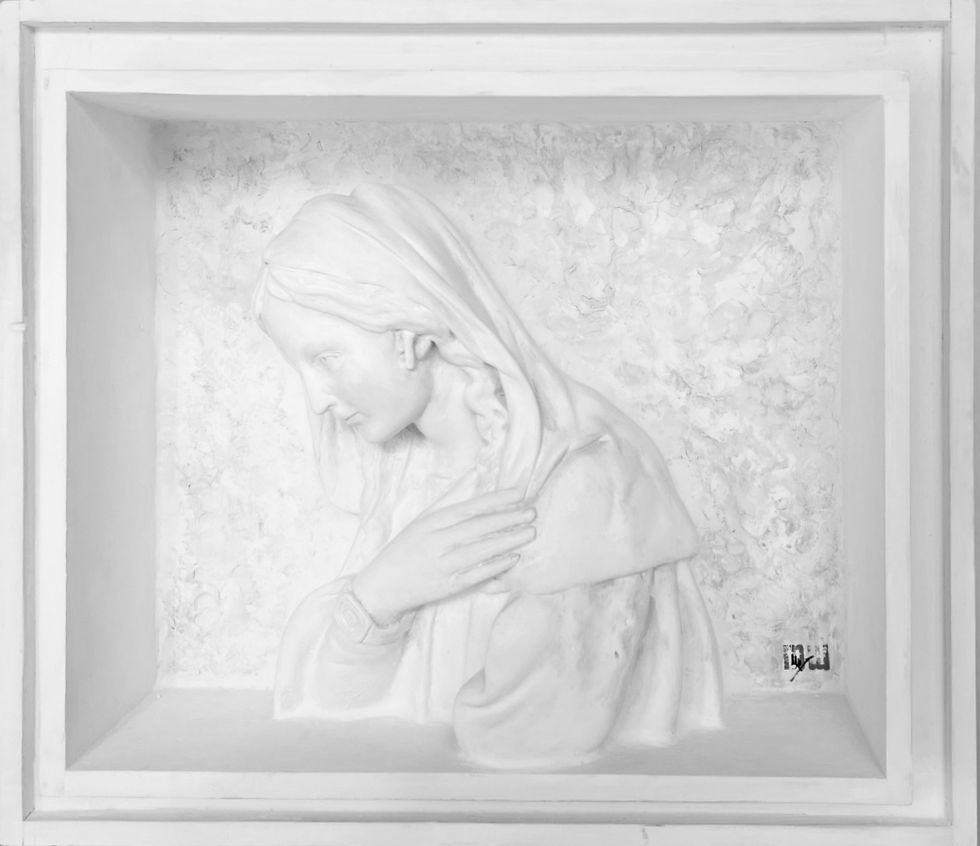
NOTHING IS REAL (2025)
Vintage Statue of Maria with added multi-media. Re-framed
70 x40cm
€1850-
Who do we turn to when we need guidance — God or Google?
There was a time when, in moments of uncertainty or need, people turned to prayer, to the church or to those around us for guidance and advice. Today, increasingly, we turn to the internet.
Religion has traditionally offered a source of truth, often described as the “one true God”. The internet now offers something remarkably similar: immediate access to an almost limitless amount of knowledge, opinions and answers. The church was also a place where people came together around a shared belief. In many ways, the internet has become the largest gathering place of them all.
But if the search for truth was once rooted in faith, where does truth come from now? The internet gives us access to more information than ever, yet it has also made it increasingly difficult to know what is true. We can choose the sources we trust, surround ourselves with people who share our beliefs and find an answer to support almost any position.
Religion has often been blamed for creating division and conflict. But as the internet increasingly becomes a source of certainty, identity and belonging, are we simply creating a new arena in which to divide ourselves?

IT"S MY LIFE
2025
Vintage Plaster Statue with applied mixed media
28cm High.

IT"S MY LIFE
2025
Vintage Plaster Statue with applied mixed media
28cm High.

IT"S MY LIFE
2025
Vintage Plaster Statue with applied mixed media
28cm High.

IT"S MY LIFE
2025
Vintage Plaster Statue with applied mixed media
28cm High.

IT"S MY LIFE
2025
Vintage Plaster Statue with applied mixed media
28cm High.
THE MAN
2024
Vintage Plaster Statue with applied mixed media
28cm High.

IT"S MY LIFE
2025
Vintage Plaster Statue with applied mixed media
28cm High.
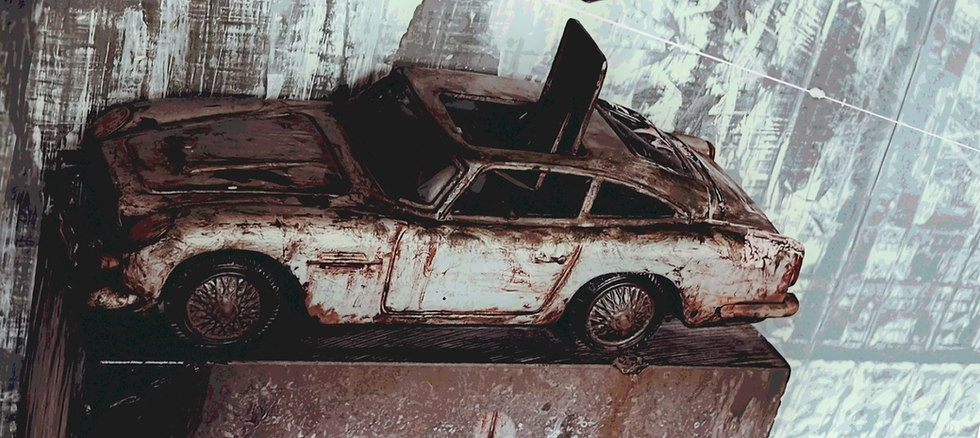
THE MAN (2024)
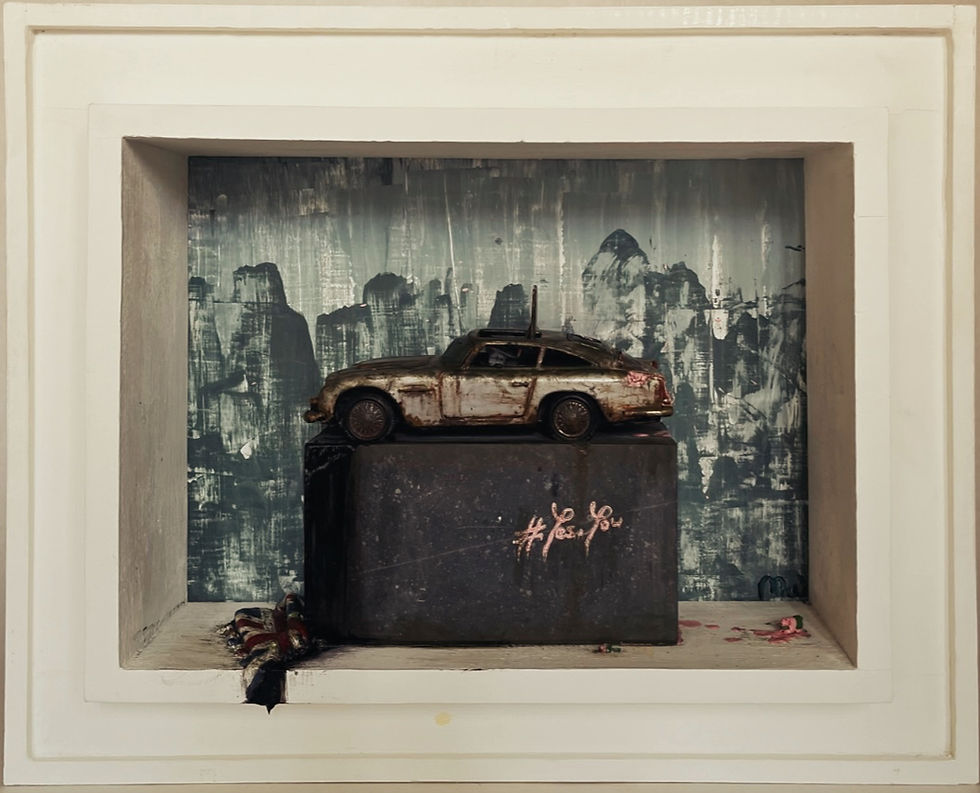
Vintage 007 toy car with applied mixed media
€1850-
Can we still admire the symbols of a culture we have learned to question?
For generations, popular culture celebrated a particular ideal of masculinity — strength, success, confidence, sexual freedom and dominance. Fast cars, wealth and the pursuit of women became familiar symbols of what it meant to be a successful man. For women, this often meant being cast as objects of desire, status or conquest within the same narrative.
Today, many of these attitudes and expectations are being questioned. Movements such as #MeToo have challenged behaviours and power relationships that were once accepted, exposing a darker side to ideals that were often presented as glamorous, exciting or simply part of being a man.
But what happens when the things we grew up admiring become uncomfortable, even taboo? Can we still love an object, a character or an ideal while recognising the culture and attitudes that came with it?
Can nostalgia survive when the values attached to it have changed?
The work explores the tension between changing social values and the things we still feel drawn to — between what we once celebrated and what we now question.
SWEET LITTLE LIES
2025
Vintage Bible, books and toys with added multi-media
38cm high
SWEET LITTLE LIES (2025)
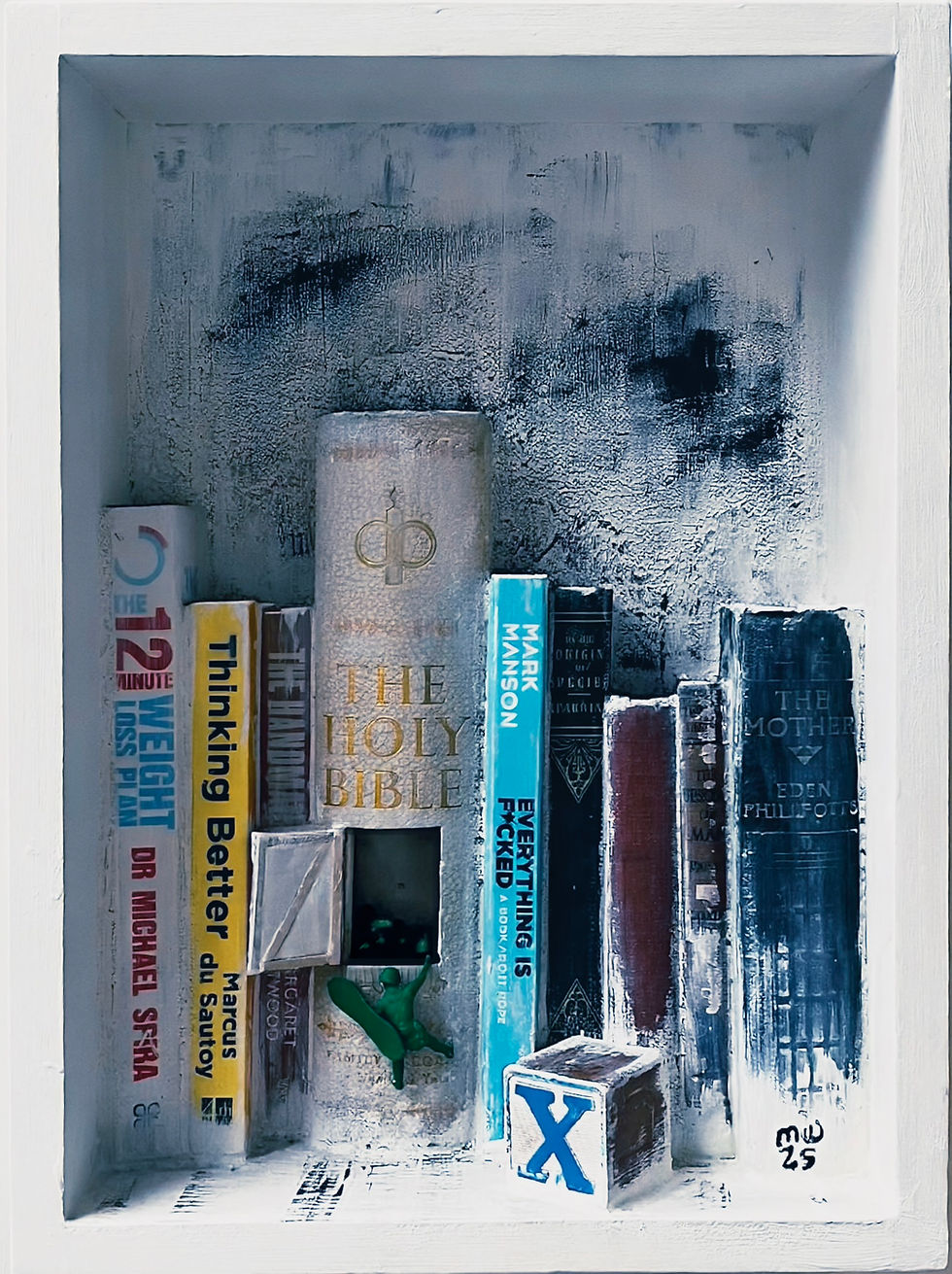
Vintage Bible, books and toys with added multi-media
38cm high
€1850-
Are your beliefs really your own?
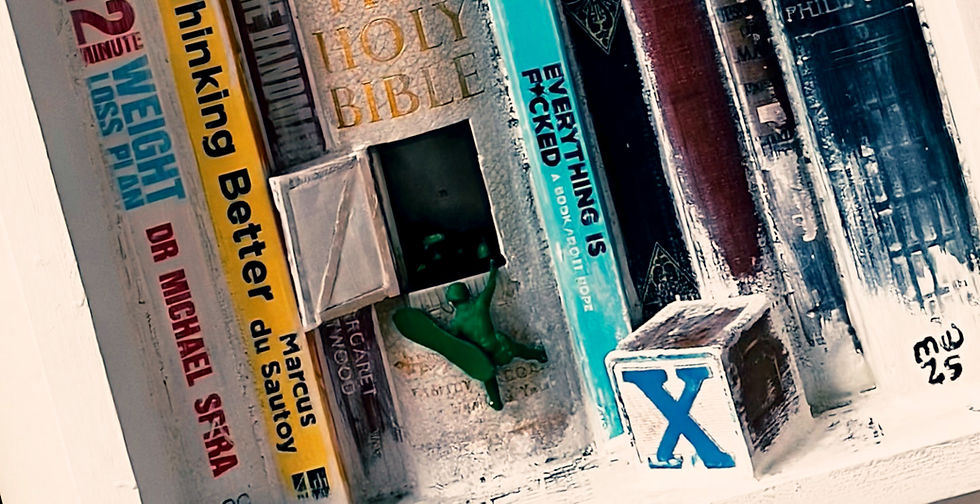
Sweet Little Lies considers how belief systems — religious, ideological or digital — can enter our lives disguised as something harmless, familiar or even benevolent. Like the Trojan Horse, they can be welcomed inside before their influence becomes apparent, shaping what we think, what we trust and how we see the world.
Here, soldiers emerge from the pages of the Bible, turning an object traditionally associated with wisdom, faith and moral guidance into a vehicle for influence and control. The Bible is not simply being used as a symbol; its history, authority and cultural significance are central to the work. The familiar becomes something more unsettling — a reminder that the things we trust can also shape us.
.jpeg)
STARMAN
2024
Vintage Plaster Statue with applied mixed media
28cm High.
STARMAN (2024)
2024
Vintage Mickey Mouse figure with added multi-media
38cm high
€1850-
Why do we turn people into Gods?
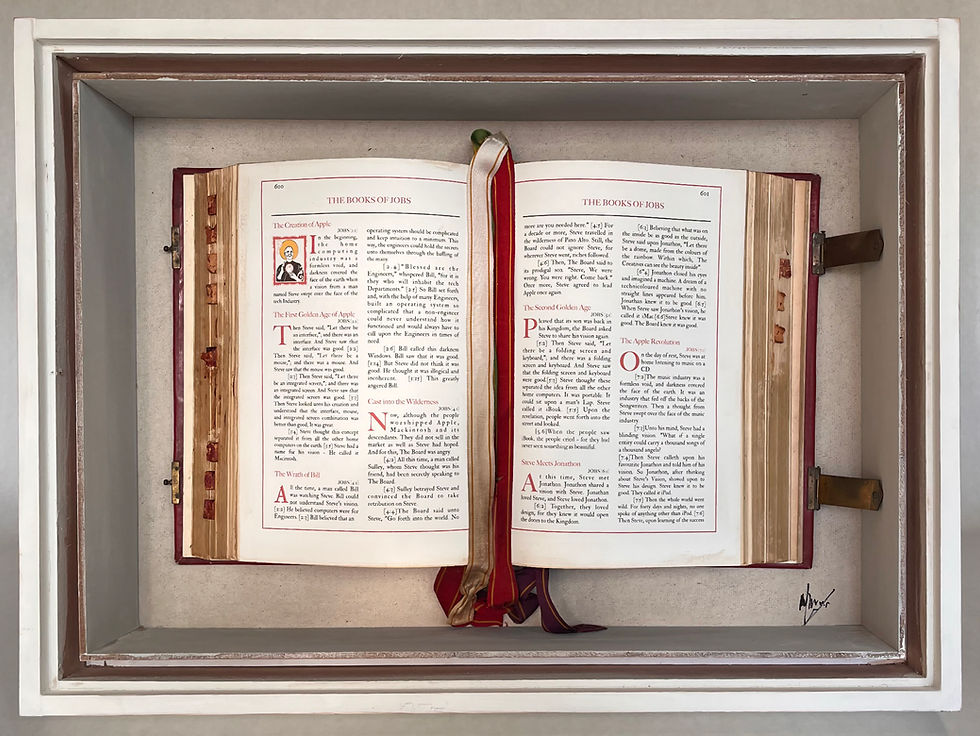
Starman examines our tendency to elevate extraordinary people into something beyond ordinary admiration. From Benjamin Franklin, who was famously celebrated and idolised during his time in France, to Steve Jobs and Elon Musk today, certain individuals become symbols of genius, progress and a vision of the future.
The artwork creates a modern scripture: The Books of Jobs. Written in the language and structure of the Bible, it retells the story of Apple through creation, prophecy, betrayal, exile, revelation and redemption. Steve Jobs becomes the visionary creator, his followers become believers, and Apple becomes something approaching a faith. The familiar language of scripture is deliberately applied to the mythology surrounding a technology leader, asking where admiration ends and idolisation begins.
Starman is therefore less about technology replacing religion than about something much older: our tendency to search for exceptional individuals to believe in, follow and sometimes worship. The objects, language and mythology of the work bring that familiar human impulse into a contemporary setting.